Safaricom shares sale explained: Why government chose Vodacom
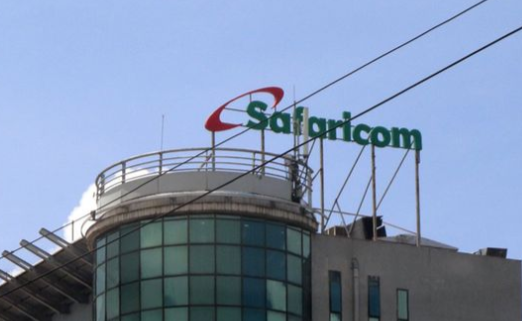
Despite the reduced shareholding, the government is demanding to retain two seats on the Safaricom board to remain influential in the company.
What does the decision of the government to sell its part of Safaricom Company shares to Vodafone Group, another telecommunications firm, mean?
The Eastleigh Voice digs in to simplify this move that has attracted criticism and praise alike.
More To Read
- MPs to hold public hearings on proposed sale of 15 per cent Safaricom stake to Vodacom
- Kenya’s 5G users hit 1.5 million as adoption accelerates
- Kenyans invited to give views on proposed partial sale of government’s Safaricom stake
- Ndindi Nyoro questions government’s decision to sell 15 per cent Safaricom stake
- Government offloads 15 per cent Safaricom stake to Vodacom in Sh244 billion deal
- Safaricom rolls out Daraja 3.0 in major M-Pesa API redesign
There has been a concerted discourse debate surrounding the government's idea to sell a portion of its shareholding in Safaricom, Kenya's company seen as most valuable.
The proposed sale involves the disposal of 15 per cent of the government's 35 per cent stake to South African telecom giant Vodacom, a subsidiary of the Vodafone Group.
The sale, which includes a premium share price and several strategic conditions, has attracted national attention due to its financial magnitude, its implications for Safaricom's ownership structure, and the government's broader privatisation agenda
The State has decided to shed 15 per cent of its 35 per cent stake to Vodacom at Sh34 per share, which is 20 per cent more than the Sh28.10 value offered by the Nairobi Securities Exchange (NSE).
The total number of shares the government is looking to sell, representing the 15 per cent stake, is 6.016 billion shares, all valued at Sh204.3 billion.
The government is also expected to receive an upfront dividend amount of Sh40.2 billion, which Vodacom is expected to recoup in less than two years.
After selling the shares, the government's stake in Safaricom will reduce from 35 per cent to 20 per cent, bringing in a total of Sh244.2 billion.
Despite the reduced shareholding, the government is demanding to retain two seats on the Safaricom board to remain influential in the company.
The State has also demanded that whenever Safaricom plans to expand outside Kenya, Vodacom must first consult the government.
They have further insisted that the Safaricom CEO must be a Kenyan citizen and that the majority of independent directors on the board must be Kenyans. In addition, Safaricom's existing local suppliers must be retained for a period of not less than three years.
Vodacom is also expected to pay Sh68.1 billion to Vodafone Kenya to acquire the remaining 12.5 per cent stake that Vodafone Kenya held, giving Vodacom 100 per cent ownership of the Safaricom stake.
This will shift full ownership to Vodacom, a subsidiary of Vodafone, since Vodafone has long held the controlling ownership of the shares, but going forward, Vodacom will fully own the share value.
Ownership of Safaricom:
The previous ownership of Safaricom was:
Government of Kenya – 35 per cent
Vodafone – 40 oer cent
Kenyan public – 25 per cent
However, from now on, Vodacom will hold the largest share at 55 per cent, followed by the Kenyan public at 25 per cent and the government at 20 per cent.
The sale agreement must be approved by the Capital Markets Authority (CMA), the Communications Authority of Kenya (CAK), the Central Bank of Kenya (CBK), the Cabinet, Parliament, COMESA, and the EAC Competition Authority.
The Sh244 billion that the government will receive from the sale will surpass its annual privatisation target of Sh149 billion. The amount will not be used to settle debts but will be directed to the National Infrastructure Fund (NIF), which is set to be launched by the President.
National Infrastructure Fund (NIF)
The NIF will be funded through privatisation proceeds, such as the Safaricom sale and private investor funding.
Treasury Cabinet Secretary John Mbadi said the funds will only be used to settle debt if they exceed the expected amount in the future. Part of the NIF will also go to the National Sovereignty Fund, which will ensure future generations benefit from the proceeds of government asset sales—even those born long after these transactions. The fund will also be supported by the planned sale of KPC.
"It is not going to be spent on anything else, apart from infrastructure development, and not just commercially viable public infrastructure projects; that is the bottom line," Mbadi stated.
Mbadi, while appearing in an interview on a local radio station, defended the share sale vigorously.
He said the reason the sale was not opened to the public through the NSE is that Vodacom is an established company capable of taking risks that new and smaller companies cannot.
He also defended the State's decision, noting that if the shares had been opened to the Kenyan public, it could have saturated the market and driven down the share price, especially since the KPC listing through the IPO is also approaching.
Top Stories Today